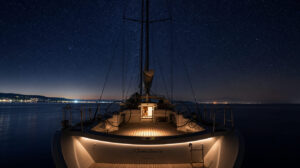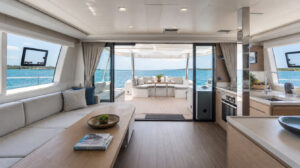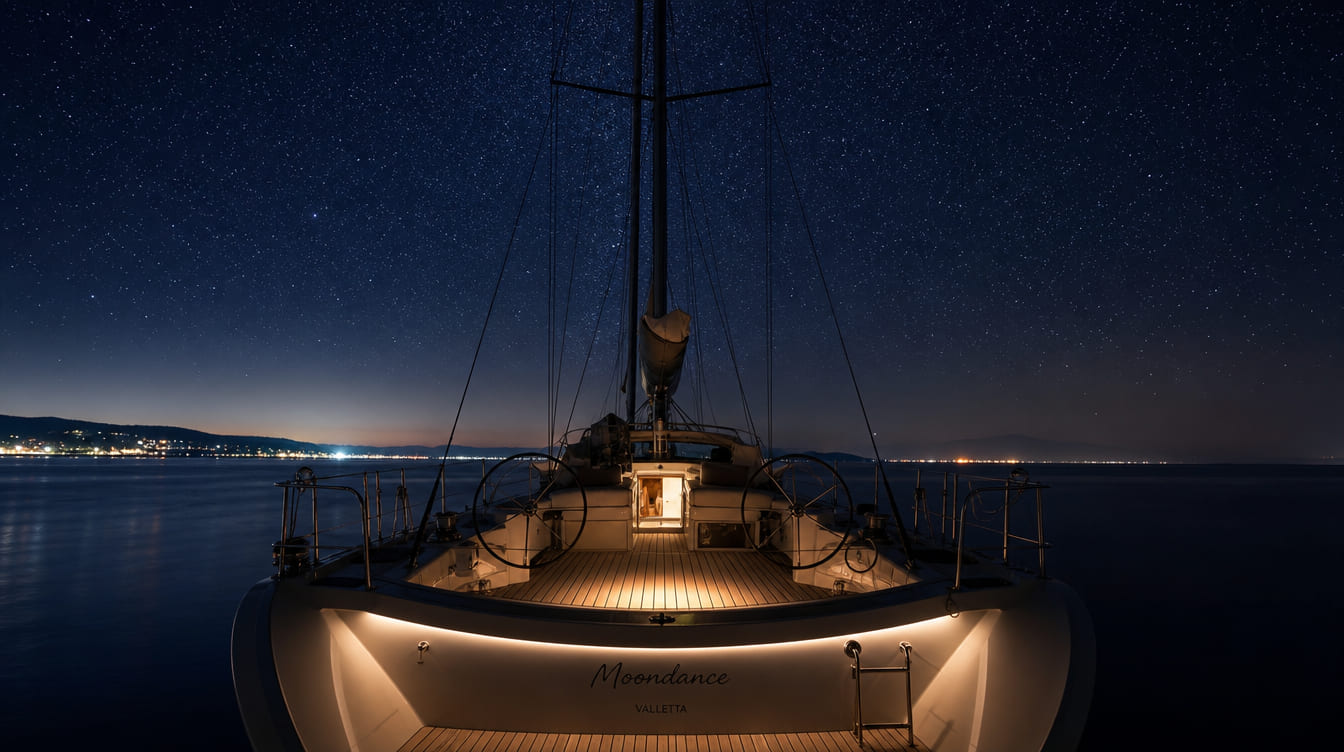
Most guests picture a charter by daylight: turquoise water, a lunch stop in a quiet bay, the coastline sliding past in the afternoon sun. Fewer people picture what happens once that same coastline disappears and the boat is lit only by its own navigation lights and whatever the sky is doing above it. It is a different experience entirely, and for many guests, it becomes the part of the trip they talk about the longest.
Why Night Sailing Happens on a Charter
Time on the water after dark tends to fall into two categories. The first is the evening sail, a short stretch after dinner or timed around sunset, often built into an itinerary specifically for the light and the change of pace it brings. The second is the overnight passage, used when a longer distance between destinations makes more sense to cover while guests sleep than while they wait at anchor.
Neither is a detour from the holiday. On many itineraries, particularly island-hopping routes across the Caribbean or the Cyclades, an evening departure is simply the most comfortable way to arrive somewhere at a civilised hour the next morning, with the crew managing the passage overnight.
What the Experience Actually Feels Like
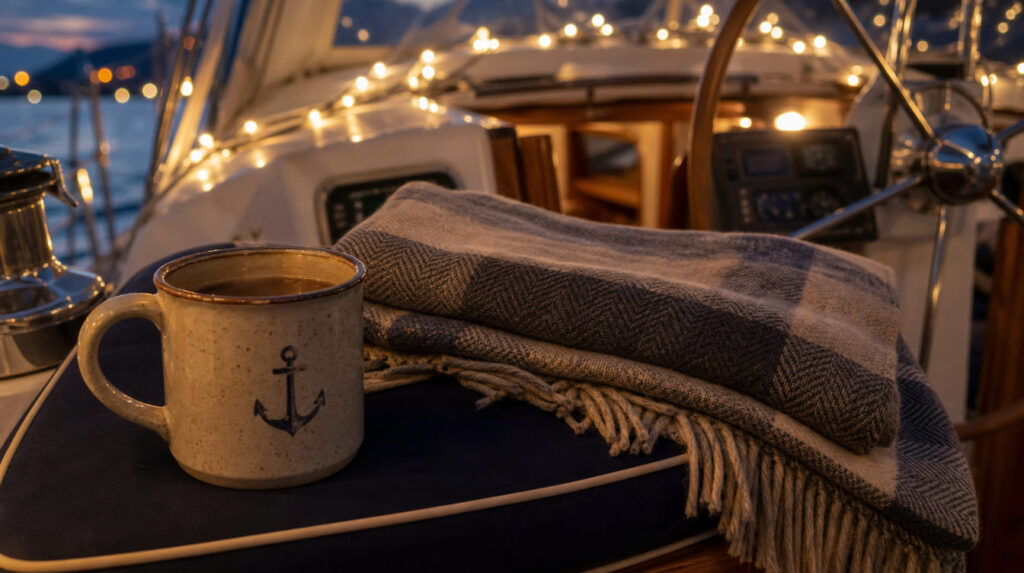
The sea changes character after dark in ways that are easy to underestimate from a marina berth. The air cools noticeably, even in destinations that felt properly hot at noon, and a light jumper or wrap becomes genuinely useful rather than optional. Sound carries differently too. The engine, the water against the hull, the occasional creak of rigging, all of it becomes more noticeable once the visual distractions of daylight are gone.
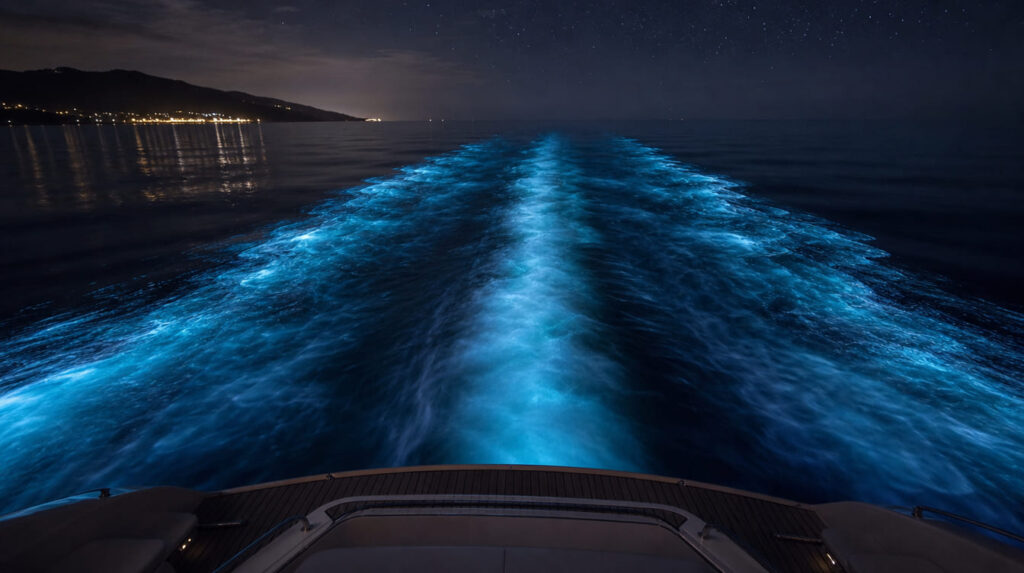
What replaces them is usually the reason guests remember it. Away from coastal light pollution, the stars become properly visible in a way few land-based views can match, and in destinations such as the Caribbean and the Maldives, bioluminescent plankton can turn the boat’s wake into a faint trail of blue-green light. It is a quieter, more contemplative kind of experience than a daytime sail, and it tends to suit conversation, a warm drink in hand, or simply watching the horizon do very little for a while.
Safety at Night Is the Crew’s Responsibility
On a self-sailed charter, night passages demand real preparation from the crew on board: understanding navigation lights, running structured watch rotations, tracking other vessels, and knowing exactly what to do in an emergency. On a Maréa charter, that entire body of responsibility sits with the professional captain and crew, not the guests.
Route planning, weather monitoring, watchkeeping and vessel identification are handled as a matter of course, the same way they would be during the day. Guests are welcome to stay up and take in the experience, ask the crew about the lights of a passing vessel, or simply head to bed, all without needing to know a single rule of the road themselves.
What to Bring for an Evening or Night Sail
A little preparation goes a long way toward enjoying the experience rather than just enduring it. A warm layer is worth having on deck even after a hot day, since the temperature drop after sunset is more noticeable on open water than on land. A torch or headlamp is useful for navigating around the boat, and guests prone to motion sensitivity may find the motion more noticeable at night, when the visual horizon that usually helps with balance disappears. Beyond that, there is little to prepare. This is an experience to settle into, not one to plan for.
Where Night Sailing Feels Most Memorable
Santorini and the Cyclades. An evening sail beneath the caldera, timed around sunset, is one of the most photographed views in the Aegean for good reason.
The Caribbean. Warm evening air and, in the right conditions, visible phosphorescence in the boat’s wake make for a genuinely different kind of after-dark sailing.
Cape Town. A sundowner cruise along the Atlantic seaboard, with Table Mountain catching the last of the light, is a local ritual worth building into an evening itinerary.
The Maldives. Minimal light pollution across the atolls makes for exceptional stargazing on clear nights, best enjoyed from open deck space.
The French Riviera. An evening cruise along the coast, with the lights of Cannes or Antibes visible from the water, offers a different perspective on a stretch of coastline usually seen from the shore.
A Different Kind of Hour on the Water
Night sailing is not simply daytime sailing with the lights off. It is quieter, slower, and shaped by things a daytime itinerary rarely offers: proper stargazing, the occasional flash of bioluminescence, a boat that feels entirely its own once the coastline has gone dark. With a professional crew handling everything the sea requires after sunset, the only real decision left for guests is whether to stay up for it.
FAQ
Do guests need to help with navigation during a night sail? No. Every Maréa yacht is fully crewed, so navigation, route planning and watchkeeping at night are entirely the responsibility of the professional captain and crew.
Is night sailing safe on a private charter? Yes. Professional crews follow standard safety practices for night passages as a matter of course, including monitoring other vessels, tracking weather and maintaining a proper watch throughout.
Will it be cold at night, even in a warm destination? Often, yes. Air temperature tends to drop noticeably after sunset on open water, so a light layer is worth having on deck even after a hot day ashore.
Can I request an evening or sunset sail as part of my itinerary? Many itineraries can include an evening sail or sunset cruise on request; it is worth raising with the Maréa team while planning the itinerary.
Is stargazing actually better from a yacht at night? In destinations with minimal coastal light pollution, such as the Maldives or more remote anchorages elsewhere, visibility is often considerably better from the water than from shore.
What is bioluminescence, and will I see it on a night sail? Bioluminescence is a natural glow produced by certain marine plankton, sometimes visible in a boat’s wake at night in warm waters such as the Caribbean, though it depends on location, season and conditions.