Sailing has its own vocabulary, built up over centuries and still used, almost unchanged, on every yacht in the world today. Guests do not need to master it to enjoy a charter. The crew handles the doing. But knowing the words turns a week on the water from something you are simply experiencing into something you understand, and there is a particular pleasure in hearing the captain call for a “close reach” and knowing exactly what that means for the afternoon ahead.
Here is the vocabulary worth having, grouped the way it actually comes up on the board rather than buried in an alphabetical list.
Finding Your Bearings
| Term | What It Means |
|---|---|
| Bow | The front of the yacht, facing the direction of travel |
| Stern | The back of the yacht, where the swim platform usually sits |
| Port | The left side of the boat when facing the bow |
| Starboard | The right side of the boat when facing the bow |
| Windward | The side the wind is blowing from |
| Leeward | The sheltered side, away from the wind |
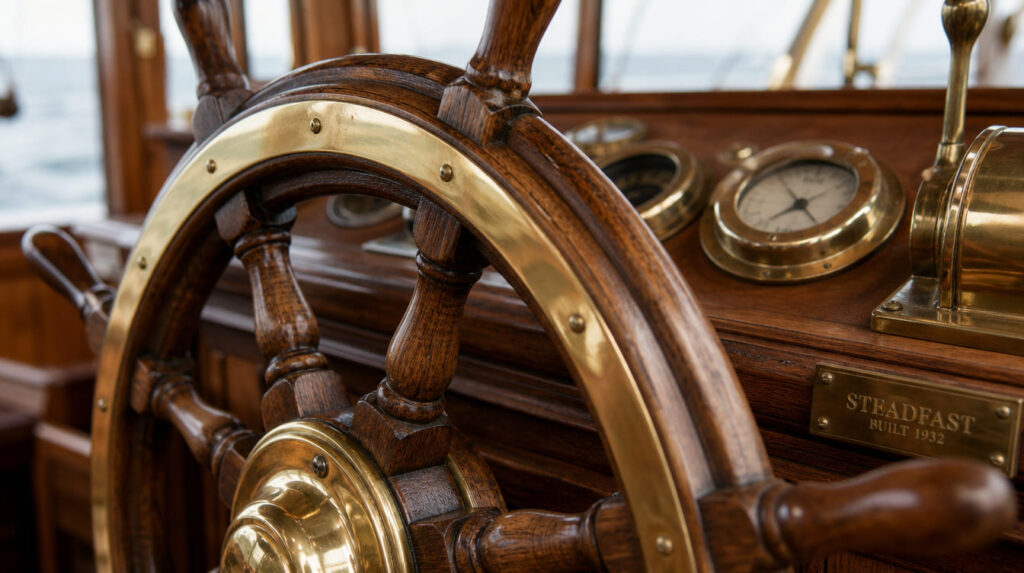
| Helm | The wheel, and the general area from which the yacht is steered |
| Draft | How deep the hull sits below the waterline |
Life Aboard
| Term | What It Means |
|---|---|
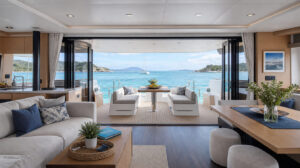
| Saloon | The main indoor living and dining area below deck |
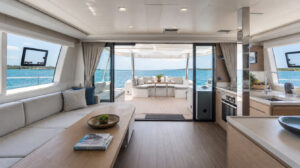
| Galley | The onboard kitchen, usually compact and cleverly designed |
| Stateroom | A guest cabin, particularly on larger motor yachts |
| Head | The onboard bathroom |
| Bimini | The canvas sunshade stretched over the cockpit or flybridge |
| Sundeck | An open upper deck for lounging, often with cushioned seating |
| Tender | The small auxiliary boat used for transfers to shore |
| Flybridge | An upper outdoor helm and lounge area found on many motor yachts |
Under Sail
| Term | What It Means |
|---|---|
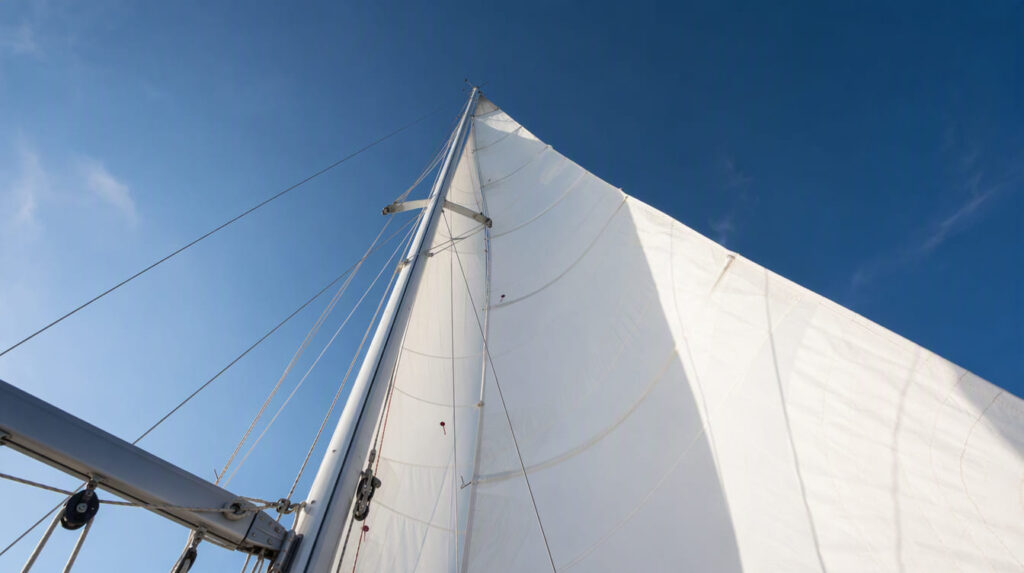
| Mainsail | The principal sail, attached to the mast and boom |
| Jib | The smaller triangular sail set forward of the mast |
| Spinnaker | A large, colourful sail flown downwind in lighter breezes |
| Heeling | The gentle lean of a sailing yacht under the pressure of wind |
| Tacking | Turning the bow through the wind to change direction upwind |
| Jibing | Turning the stern through the wind to change direction downwind |
| Beam Reach | Sailing with the wind coming directly over the side, often the smoothest point of sail |
| Knot | A unit of speed at sea, equal to one nautical mile per hour |
Rigging and Deck
| Term | What It Means |
|---|---|
| Mast | The vertical spar that carries the sails |
| Boom | The horizontal spar that holds the foot of the mainsail |
| Halyard | The line used to raise a sail |
| Sheet | The line used to adjust a sail’s angle once it is up |
| Winch | The mechanical drum used to trim lines under load |
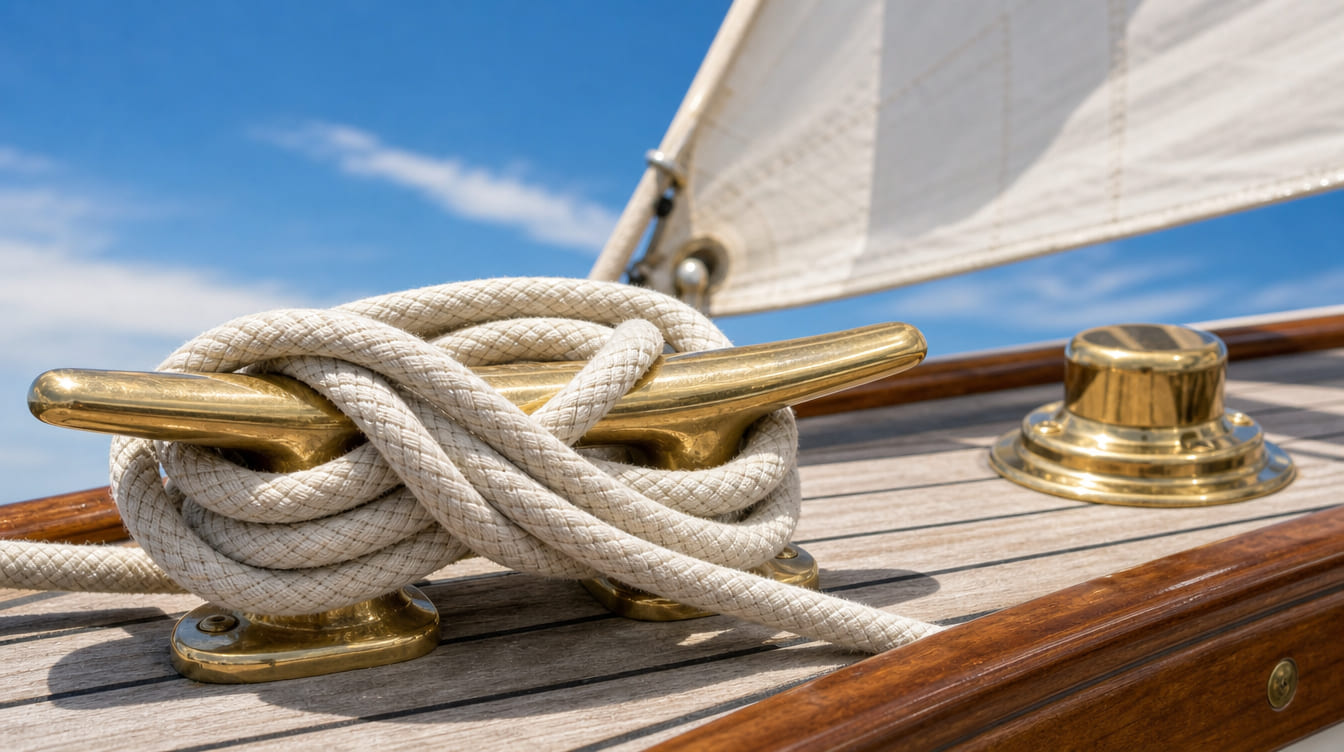
| Cleat | The fitting used to secure a line in place |
| Fender | The protective cushion hung over the side during docking |
| Mooring | Securing the yacht to a buoy, dock or anchor point |
The Language of Chartering
| Term | What It Means |
|---|---|
| Skipper | The professional captain responsible for the yacht and crew |
| Crewed Charter | A charter that includes a professional skipper and crew, standard across the Maréa fleet |
| Bareboat Charter | A charter without a crew, where guests sail the yacht themselves; not offered by Maréa |
| Itinerary | The planned route and stops for the charter, shaped around the guests aboard |
| Anchorage | A sheltered spot where a yacht can anchor overnight or for a swim stop |
| Transit Log | An administrative fee covering cleaning, licensing and documentation on select yachts |
| Provisioning | Stocking the yacht with food, drink and supplies ahead of a charter |
A Vocabulary Worth Keeping
None of this is required reading before a Maréa charter. The crew will use these words naturally throughout the week, and understanding them simply means following along, rather than wondering what “trim the main” or “we’re heading to the anchorage” actually involves. It is, in its own quiet way, part of what makes a week at sea feel like an experience rather than a service.
Explore the full fleet across the Caribbean, Greece, South Africa, the Maldives and the French Riviera, and begin shaping the itinerary around it.
FAQ
Do I need to know sailing terms before a charter? No. A professional crew manages every aspect of the yacht, so knowing the vocabulary is entirely optional, though many guests enjoy following along once they understand the terms.
What is the difference between port and starboard? Port is the left side of the boat when facing the bow, and starboard is the right side. A quick way to remember: “port” and “left” are both four letters.
What does “heeling” feel like on a charter? Heeling is the gentle lean of a sailing yacht under wind pressure. It is a normal, often enjoyable part of sailing, and is far less pronounced on a catamaran than on a monohull.
What is a tender used for on a yacht charter? A tender is the small auxiliary boat used to transfer guests between the yacht and shore, particularly useful when anchored away from a marina.
What is the difference between a crewed and bareboat charter? A crewed charter includes a professional skipper and crew who manage the yacht throughout, which is standard across the Maréa fleet. A bareboat charter has no crew and requires the guest to sail the yacht themselves.
Why do sailors use nautical miles and knots instead of standard units? Nautical miles and knots are based on the Earth’s coordinate system, which makes chart reading and navigation more consistent at sea than standard land-based units.