A yacht has less in common with a hotel room than most first-time charter guests expect. Storage is shared, wardrobes are compact, and the boat itself decides what gets used and what stays folded at the bottom of a bag for a week. Packing well for a charter is less about bringing more and more about bringing the right things.
The good news for anyone chartering with a professional crew is that the list is shorter than it looks. Navigation, safety equipment, provisioning, and route planning belong to the crew, not the guest. What is left is a genuinely simple question: what do you actually need on your body, in your cabin, and within reach on deck?
Why Packing for a Yacht Is Different
Space is the first constraint. Cabins on a charter yacht are built for comfort, not for storing a week’s worth of hard-shell luggage, so what you pack matters as much as how you pack it. The second constraint is the environment itself. Salt water, sun, and the constant movement of the boat are harder on clothing, electronics, and skin than a typical beach holiday, and a wardrobe suited to a resort pool day does not always hold up on deck.
None of this calls for over-preparation. It calls for packing with intent.
Choose a Soft Bag, Not a Suitcase
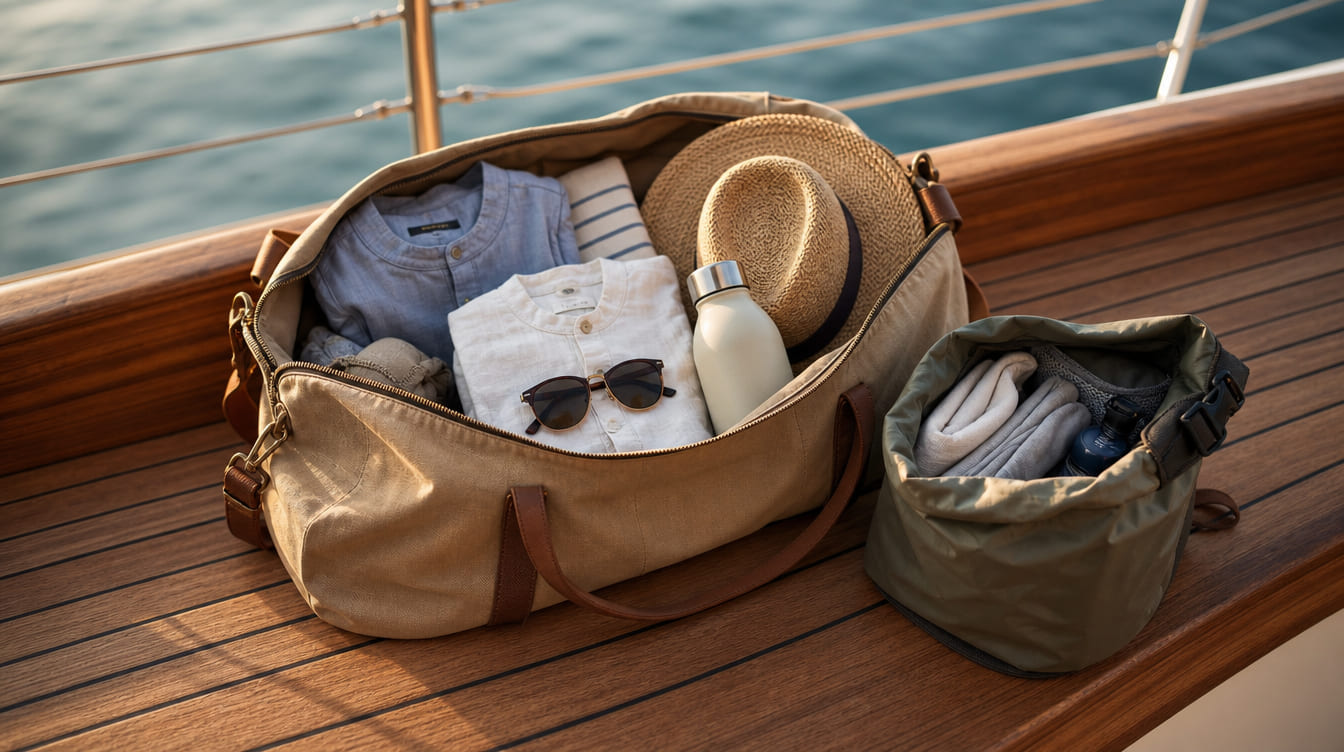
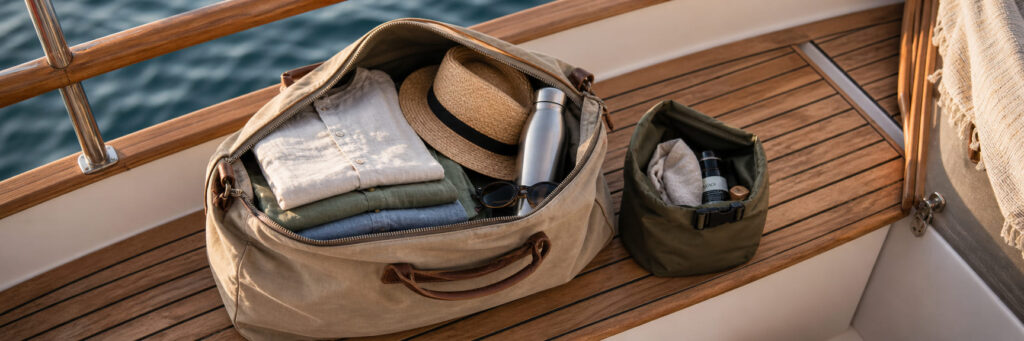
Before anything else goes on the list, the bag itself deserves a decision. A soft-sided holdall or duffel collapses into tender lockers and under-bunk storage in a way a hard-shell case never will. Wheels and rigid corners are the enemy of yacht storage, however well-made the case.
A small, separate dry bag is worth adding for anyone planning tender transfers to shore, beach stops or watersports. Phones, wallets, and camera gear stay dry, and the bag doubles as a place to keep valuables together during the day.
The Charter Wardrobe
Clothing on board earns its place through versatility rather than volume. A few pieces cover most of a week at sea:
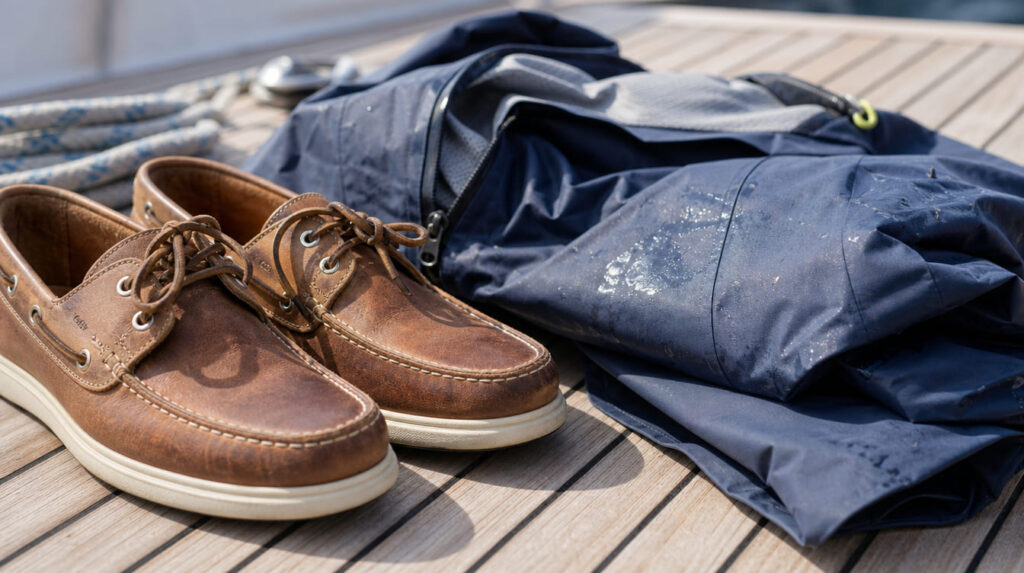
- Non-slip, light-soled shoes. Dark rubber soles can mark teak decking, so a white or light sole is the standard aboard most charter yachts.
- A lightweight waterproof layer. Even in warm destinations, wind on the water drops the temperature noticeably once the sun starts to set.
- Quick-dry fabrics. Swimwear, T-shirts and shorts that dry overnight save on both space and laundry.
- Sun-protective clothing. A long-sleeved rash vest or UV-rated top is more comfortable for long days on deck than repeated sunscreen application alone.
- One smart-casual outfit for evenings ashore, since most charter itineraries include at least one dinner at a harbourside restaurant or beach club.
Quality and versatility matter more than quantity. A capsule wardrobe of six or seven pieces, chosen for the climate and the itinerary, will outperform a full suitcase every time.
Sun, Sea, and Skin
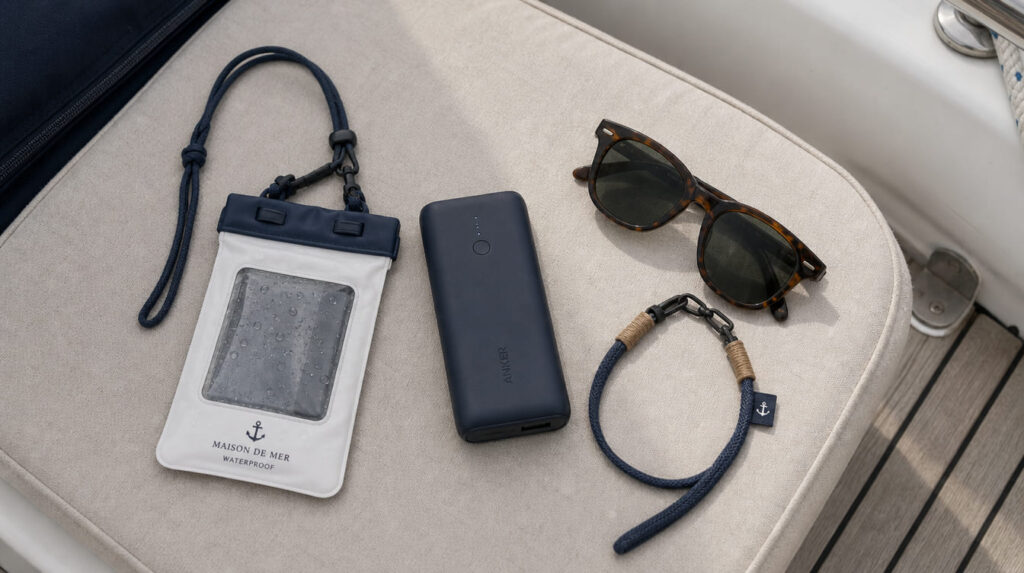
Sun exposure on the water is more intense than most guests expect, partly because of reflection off the water and partly because the sea breeze disguises how strong the sun actually is. Reef-safe sunscreen, a broad-brimmed hat with a retaining clip for windy days, and polarised sunglasses cover the essentials. A small aloe or after-sun balm is worth including for the first day or two, before skin adjusts to longer hours outdoors.
Small Gear Worth the Space
A yacht rewards a few well-chosen extras, without needing anything close to a full kit bag.
- A portable charger. Cabins typically have limited sockets, and power is not always available while at anchor.
- A waterproof phone case or pouch, useful for tender rides and watersports.
- A reusable water bottle, both for the environment and for staying hydrated through warm days on deck.
- Earplugs, for guests who find the sound of water against the hull or an early-rising crew member unfamiliar on the first night.
- A universal travel adaptor is particularly relevant when chartering internationally.
What Your Crew Already Takes Care Of
This is where a private, crewed charter differs most from a self-sailed trip. There is no need to arrive with a skipper’s licence, a VHF radio operator’s certificate, anchor watch apps or navigation software. A professional captain and crew handle route planning, weather monitoring, provisioning logistics and safety equipment as standard. Guests are welcome to bring a favourite weather app out of curiosity, but it is not required reading before boarding.
It is worth carrying a small amount of local cash for tips, informal beach bars or markets in more remote anchorages where card payment is not always available, and letting the crew know in advance about any allergies or medical conditions that might matter during the week.
A Packing Note by Destination
Climate and itinerary shift the emphasis slightly depending on where you charter.
Caribbean. Pack light, breathable fabrics and a reliable rain layer for short-lived tropical showers. Reef-safe sunscreen is worth prioritising given the coral environments across many anchorages.
Greece (Santorini and the Cyclades). Evenings can turn breezy once the meltemi wind picks up, so a warmer layer is worth including even in peak summer.
South Africa (Cape Town). The Cape has its own microclimate. Layers matter here more than almost anywhere else on this list, since a sunny morning can turn windy and cool by afternoon.
The Maldives. Lightweight, minimal packing works best, with an emphasis on sun protection given the near-constant exposure across atoll-hopping days.
French Riviera. Smart-casual pieces earn their place for evenings in Cannes or along the coast, alongside the usual deck-friendly essentials.
Final Thoughts
A charter yacht asks for a different kind of packing discipline than a conventional holiday, but not a more demanding one. Once the operational side, licences, safety kit, navigation, sits with a professional crew rather than the guest, the list that remains is short, practical and genuinely easy to pack in a single soft bag.
That is the difference a fully crewed charter makes. The itinerary, the sailing and the details in between are already handled, which leaves guests with one job: deciding what to wear for it.
Explore Maréa’s fleet of handpicked, crewed yachts across the Caribbean, Greece, South Africa, the Maldives, and the French Riviera, and begin shaping the itinerary around it.
FAQ
Do I need a skipper’s licence to charter with Maréa? No. Every yacht in the Maréa fleet is chartered with a professional skipper, so no licence, certification or prior sailing experience is required from guests.
What kind of bag should I bring on a yacht charter? A soft-sided holdall or duffel bag is best, since it stores far more easily than a hard-shell suitcase in yacht cabins and lockers. A small dry bag is also worth packing for tender transfers and beach stops.
Do I need to bring my own snorkelling or watersports gear? Not usually. Many Maréa yachts include equipment such as snorkel sets, paddleboards or kayaks as standard; it is worth checking the specific yacht’s amenities before packing your own.
How much clothing should I pack for a week-long charter? Less than you would for a hotel stay of the same length. Six to seven versatile, quick-dry pieces, plus one smart-casual outfit for evenings ashore, comfortably cover most week-long itineraries.
Is cash necessary on a yacht charter? A modest amount of local cash is useful for tips, informal beach bars and smaller anchorages where cards are not always accepted, even though most charter costs are settled in advance or by card.
What should I tell the crew before boarding? Any allergies, dietary requirements or medical conditions that might affect the week are worth flagging in advance, so the crew can plan provisioning and respond quickly if needed.